Before the order
How to judge a spreadsheet site before you trust its links
Picking who buys for you is the other half of this, and it is on choosing an agent. This page is about the listing.
Anyone can publish a page of product links. The work is keeping it true, and that work is visible from the outside if you know where to look. Four checks take about two minutes.
Open three links at random. Dead or redirected listings tell you when the page was really last touched, which is usually not the date printed on it. Look for a date next to a claim, not just a date on the page. Check whether anything is ever removed: a catalogue that only ever grows is not being maintained. See whether the site admits what it does not know. A page that is confident about everything has not been checked by anybody.
Hold this guide to the same four. Every figure here names its source and the date we read it, the outbound links were tested on 4 August 2026, and the things we cannot settle are written as things we cannot settle rather than quietly left out.
How to vet a seller you cannot leave a review for
Weidian has no English buyer front end, so the usual signals arrive second hand. These four work through an agent.
Read the shop, not the listing
A shop page shows how long the seller has been trading and how much else it sells. A single listing with a brand new shop behind it is a different risk from the same listing in a shop with two years of history.
Count what the photos are doing
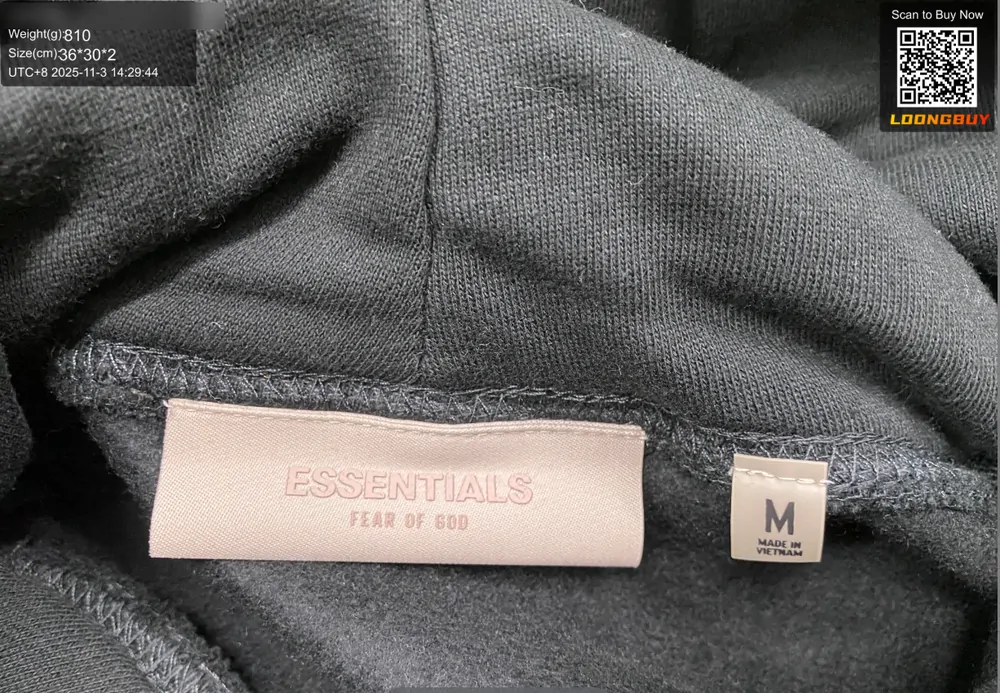
Seller photos that are all screenshots of the same studio set are stock. Photos with a hand, a floor, or a tape measure in them were taken by somebody who has the item.
Ask through the agent before you pay
The agent can message the seller in Chinese. Asking whether a specific size is in stock, before the order, costs nothing and tells you whether anybody is reading.
Treat a missing answer as an answer
A seller who will not confirm a measurement before payment will not confirm it after. That is the cheapest moment to walk away.
How to pick an item the photos can actually settle
Some listings are easy to check and some are structurally hard, and you can tell which is which before you order rather than after.
Picks well
- Clothing and shoes, which are opened by default
- Anything where the size is printed on a label
- Items with a stated colour name rather than a photo of a colour
- A listing whose own photos show the item from more than one angle
Picks badly
- Mystery bags and blind boxes, which are photographed sealed
- Sealed collectibles, where opening would destroy the value
- Listings whose images are blurred, censored or watermarked over
- Quantity-only links with no product detail behind them
How to use the search and the reading tool on this site
Two things here do work rather than describe it. Neither needs an account.
The search at the top of the home page
Type a product name, a brand or a keyword and it runs the search on the listings site directly. Use it when you know roughly what you want. Use the category tiles underneath it when you do not, because browsing a category surfaces things a keyword never will.
Open the home pageThe three-question reading tool
On the page about reading a photo set there is a short tool: pick the kind of item, what you are seeing, and how long it has been sitting. It answers with the published rule that applies and what it is reasonable to ask for. It is a reading aid, not a ruling, because nobody here can see your order.
Open the reading toolQuestions about picking things
What happens after the order is covered on where the check sits in an order.
Can I ask for a measurement before ordering?
Yes, through the agent, and it is the single most useful question you can ask. Name the measurement and the unit. Asking whether it runs small gets an opinion; asking for the chest width flat in centimetres gets a number.
Are seller photos reliable?
They are marketing. They are useful for spotting what the item is supposed to look like, which is what you will compare the inspection photos against later. Keep a screenshot of the listing at the moment you order.
What if a listing disappears after I order?
It happens often, and it is why this guide links to category pages rather than to individual products. If the order is already placed the agent holds the record; your screenshot is what settles any argument about what was advertised.